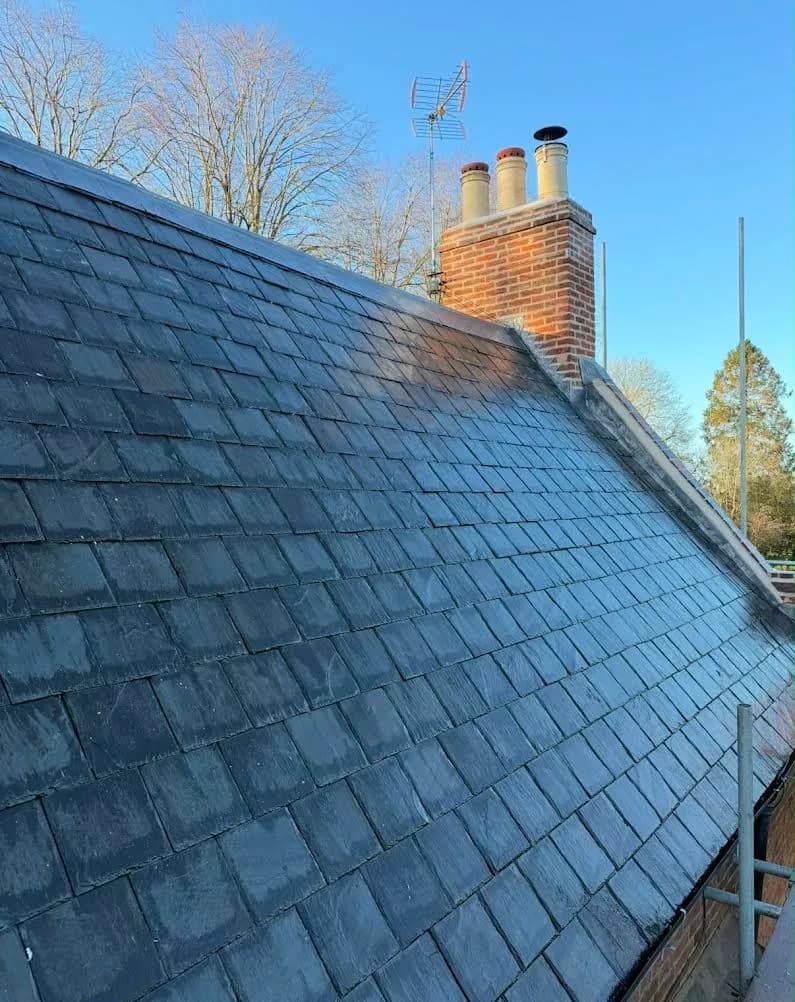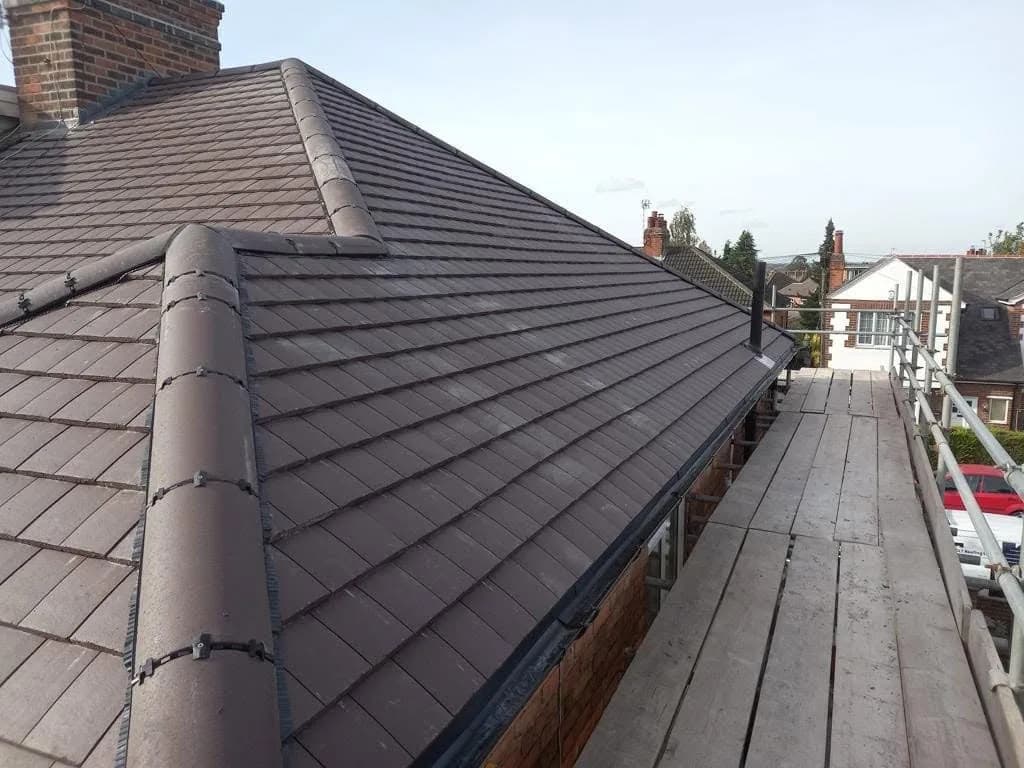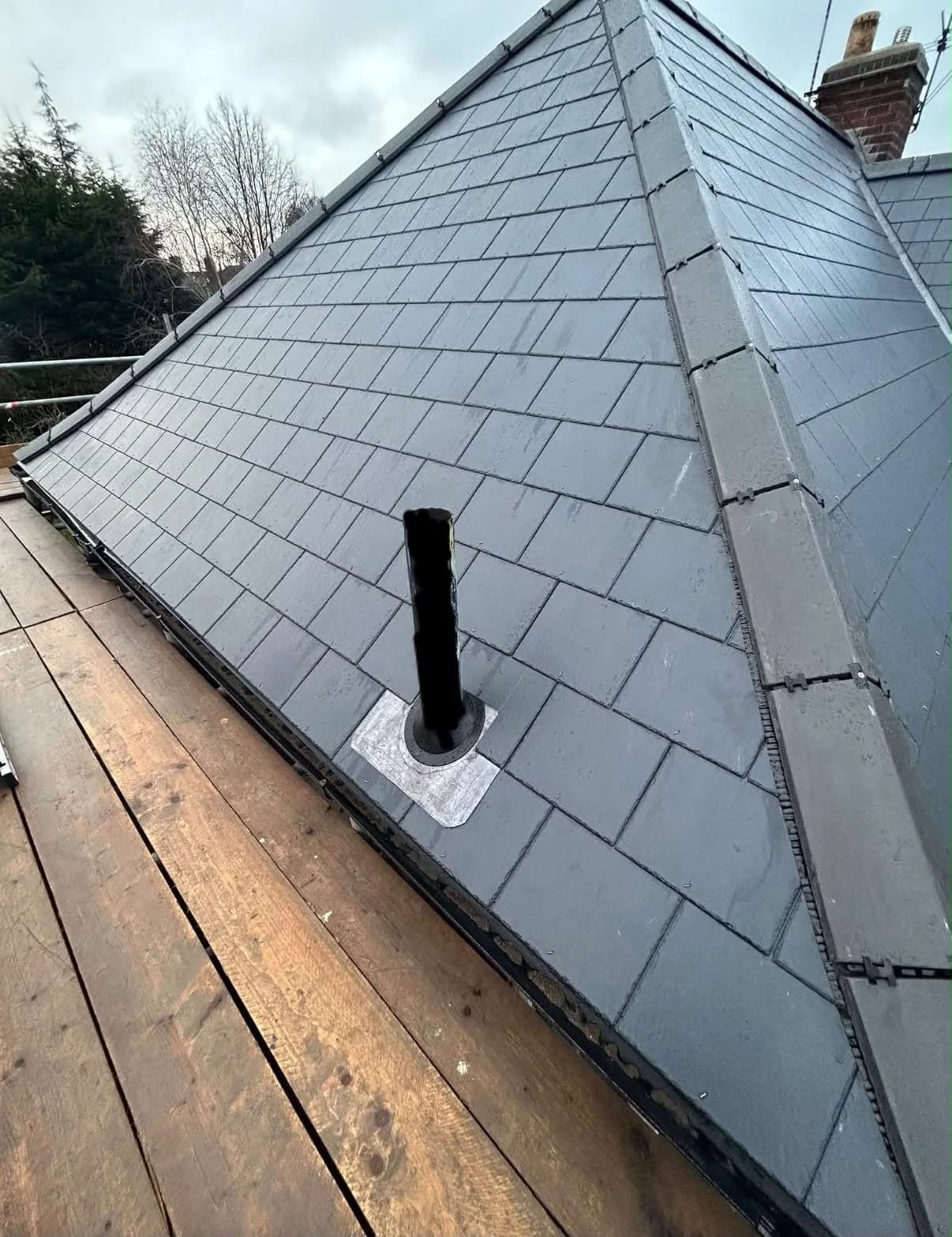
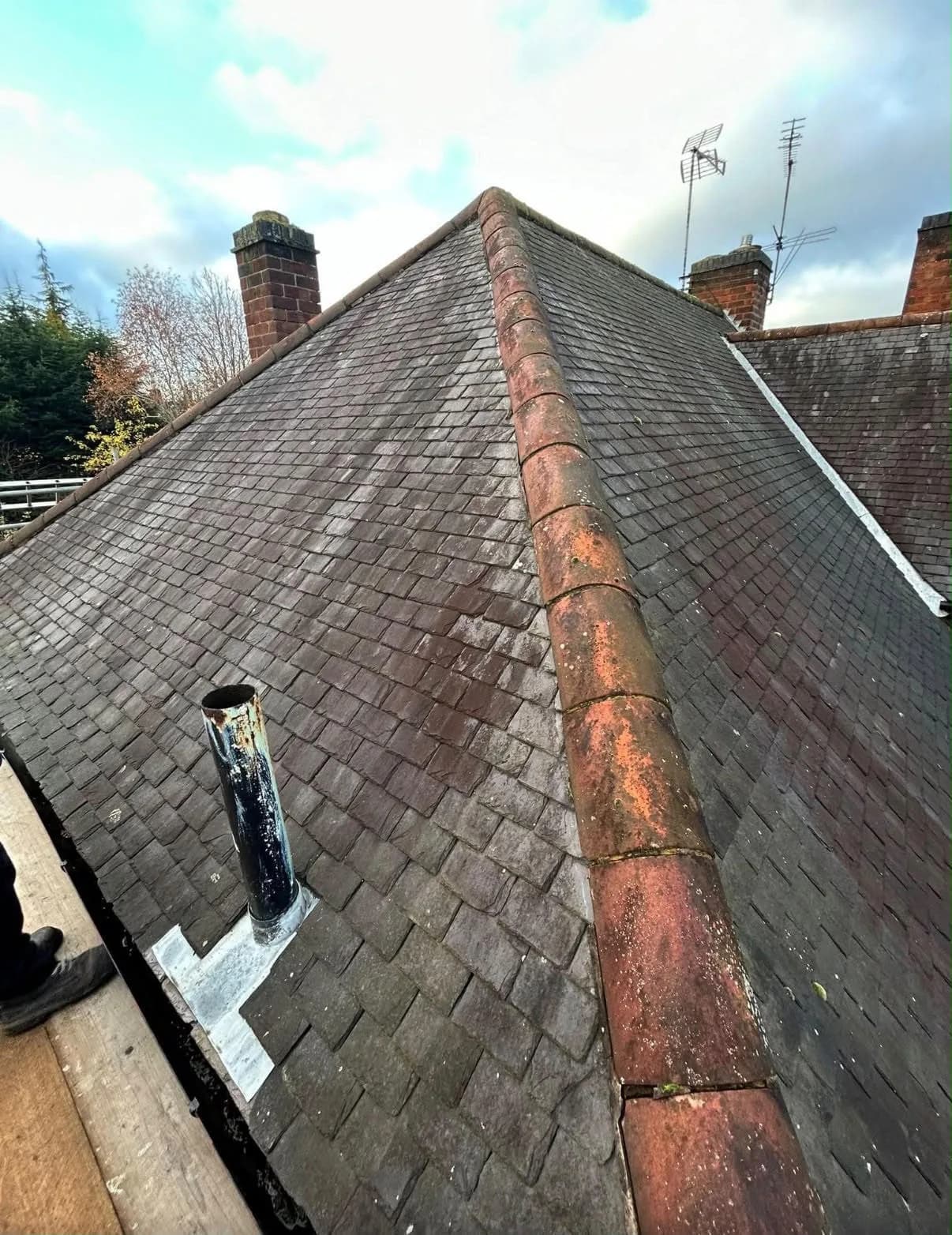
A pitched roof that's been slated or tiled well should last decades and barely ask for attention. Eventually every roof reaches the end of that run — slates start slipping, tiles crack, the ridge works loose — and at that point patching stops being economical and a proper re-roof is the better spend.
We re-roof pitched roofs across Leicester and the Midlands, on everything from Victorian terraces to modern estates, using high-specification materials that have been tried and tested, and guaranteeing our workmanship in writing for ten to twenty-five years, depending on the system.
Slating and tiling
We work with natural slate, and concrete and clay tiles — matching what's already there where it matters, and advising honestly where a change makes sense.
Where the existing slates or tiles are worth keeping, we keep them. With slate we look at the thickness and the overall condition; a larger slate is more likely to go back on than a small one, simply because it's more durable. With tiles it's about whether they're flaking or fragile to the eye and to the touch. If we can't reuse enough of what's there, our supplier can usually source reclaimed material rather than new.
On a listed building we obtain a product specification before any work starts, so what goes on the roof is what meets the requirements. In a conservation area no specification is required, so we source the closest match we can find instead.
Ridge and gable systems
Ridges and gable ends are where most pitched roofs fail first, so they're worth getting right. We fit both dry systems — ridge and verge tiles mechanically fixed and ventilated — and traditional wet ridges and gable ends bedded in mortar.
Dry fixing is what we'd put on almost every roof, and it's what current building standards favour: mortar bedding cracks, washes out and eventually lets tiles work loose. The exception is heritage work. On a listed building, or a property inside a conservation area, a properly executed wet ridge is usually the right call — and often what the specification asks for — so that's where we'd recommend one.
What a re-roof involves
- Strip the old covering and check the condition of the timbers underneath.
- Replace the battens. Those come off and go back new every time, not only when they look tired.
- Lay a breathable membrane so the roof space can dry out rather than trap moisture.
- Re-slate or re-tile, finishing the ridge and gable to suit the roof.
- Leave you with the roof guaranteed, in writing.
We recently re-roofed a house whose old interlocking concrete tiles had had their day — new membrane, new battens, and a dry ridge and dry gable throughout.
The guarantee, and who stands behind it
Our workmanship is guaranteed for ten to twenty-five years on a re-roof, depending on the materials and system used. The term is decided by what actually goes on your roof, so we tell you the figure when we survey it and then write it into your quote — you have it before you commit to anything. It's our guarantee, given by us, with no third-party scheme in the middle.
If something isn't right with work we've done, send us a message with a photo and we aim to be out to look within two working days. Where it's down to our work we put it right at no extra cost — on that visit if we can, and within five working days if we can't. Here's the full process.
If your roof is dropping slates or you're planning a re-roof, get in touch for a free quote and we'll take an honest look.