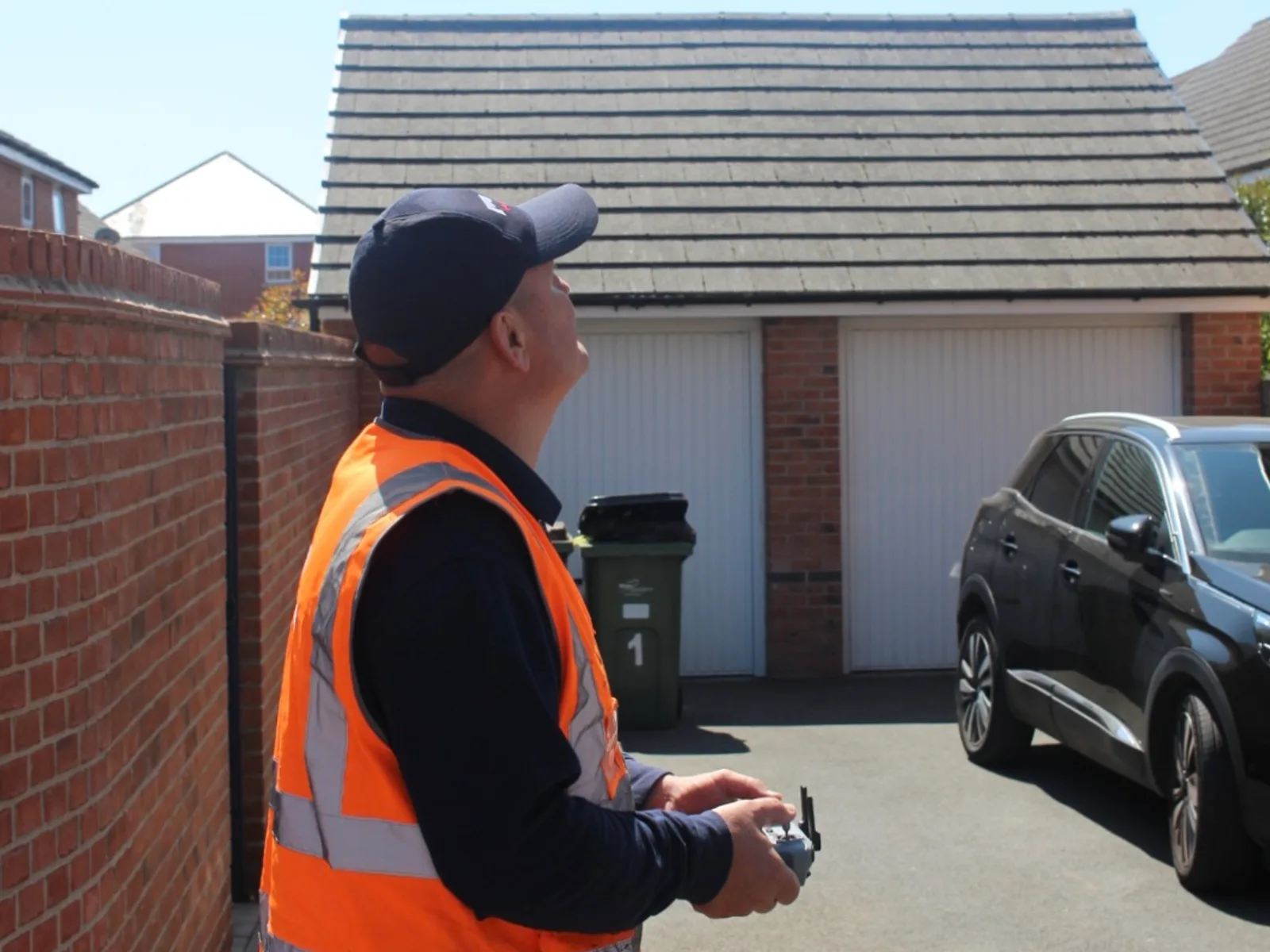
Most people never see their own roof. You find out it needed attention when a ceiling stains, a surveyor flags it mid-sale, or an insurer asks a question you can't answer. A drone survey closes that gap: we fly the roof, photograph it properly, and write up what's actually there.
Surveys start from £360 inc VAT, and you get a written condition report you can hand to somebody else.
When a survey earns its money
- Insurance. Insurers increasingly want evidence of a roof's condition, either before cover or as part of a claim. A dated report with photographs is worth considerably more than a description over the phone.
- Buying a house. A homebuyer's survey will often note the roof "could not be fully inspected" and leave you to work out what that means for your offer. A drone survey tells you.
- Selling one. If your roof is sound, proving it removes a negotiating lever before the buyer picks it up.
- Commercial and industrial buildings. Large or awkward roofs where getting someone up safely is expensive, and where a small defect can turn into a significant claim.
- Planning ahead. If you know a re-roof is coming in the next few years, a survey tells you whether it's two years away or five, which is the difference between budgeting and reacting.
What you get
A drone flight covering the full roof, including the areas nobody sees from the ground — ridges, valleys, flashings, chimney junctions, gutter lines and flat-roof outlets. Then a written report: what condition the covering is in, what's failing or close to it, what we'd recommend, and photographs showing why.
If the report says the roof is fine, that's what it'll say. We're not looking for work that isn't there — the report is the product.
What a report actually looks like
Here's a worked example, from a recent survey of a nine-year-old pitched roof. The customer and property are placeholders — this is here to show the format, not to stand in for a testimonial.
- Customer
- A.N. Other
- Property
- Leicestershire (worked example)
- Date of inspection
- 19 August 2026
- Weather during inspection
- Clear and sunny after a dry spell, around 30°C.
Dear A.N. Other,
Following on from our visit, please find the results below for your drone survey, along with evidential photos.
Chimney
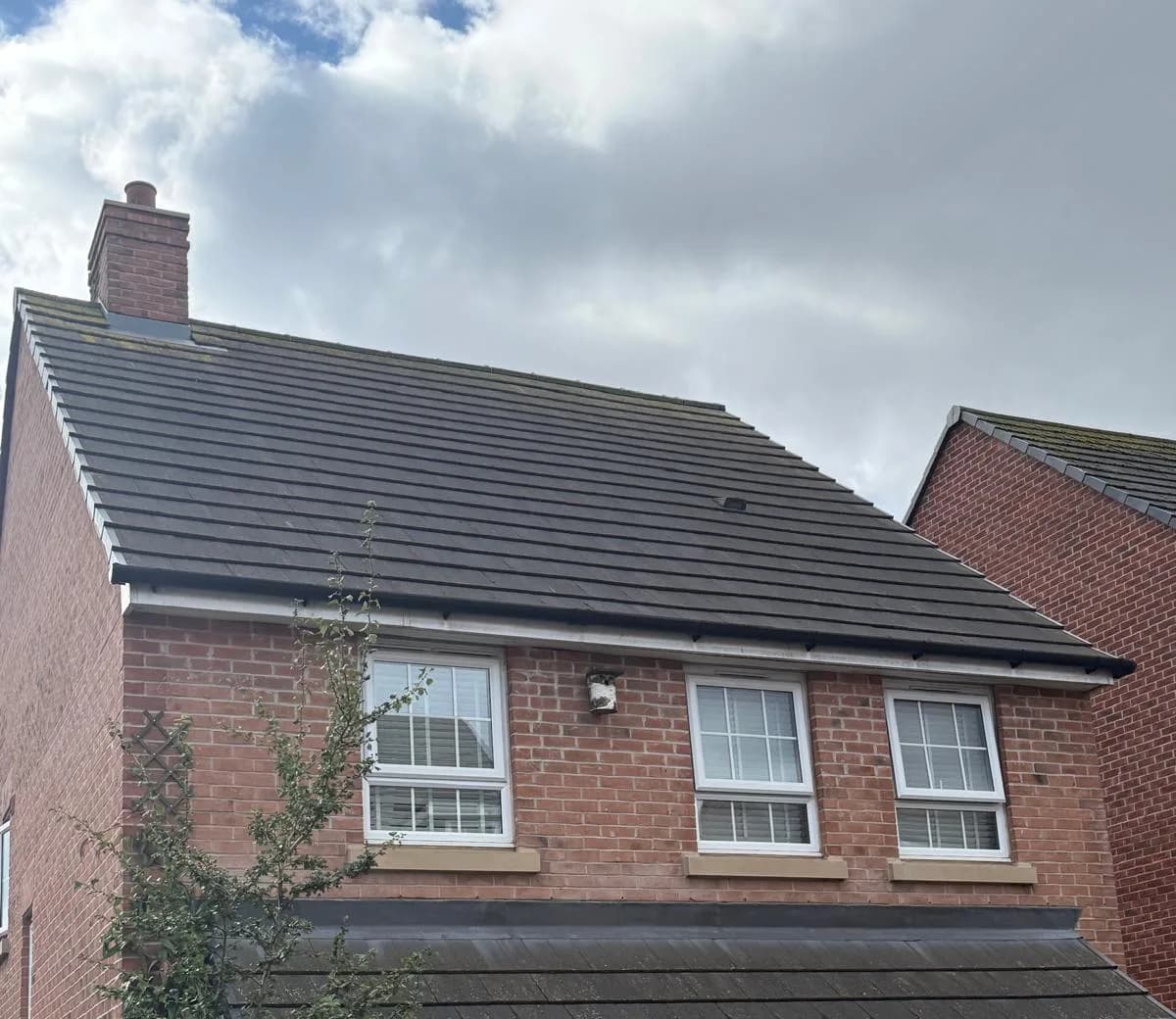
A decorative fibreglass chimney with GRP flashing, still properly in place with no signs of water ingress. One side of the brickwork was slightly darker and carrying more lichen, where rainwater running off the stack lands.
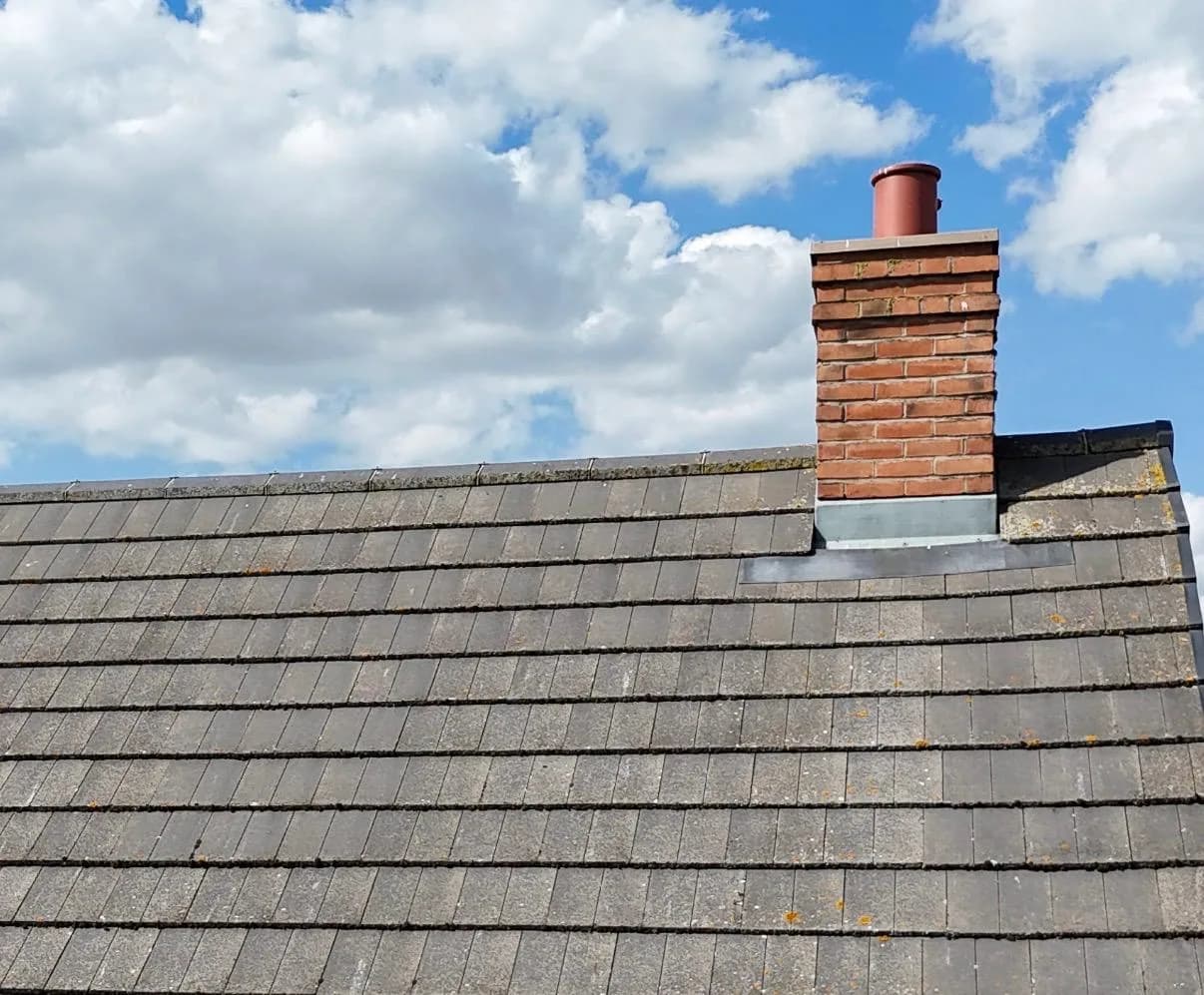
Recommendation: Keep an eye on the darker side of the stack for any sign of water ingress starting.
Ridges and gable end details
Dry ridge and dry verge throughout — no mortar involved — with no missing or slipped sections anywhere.
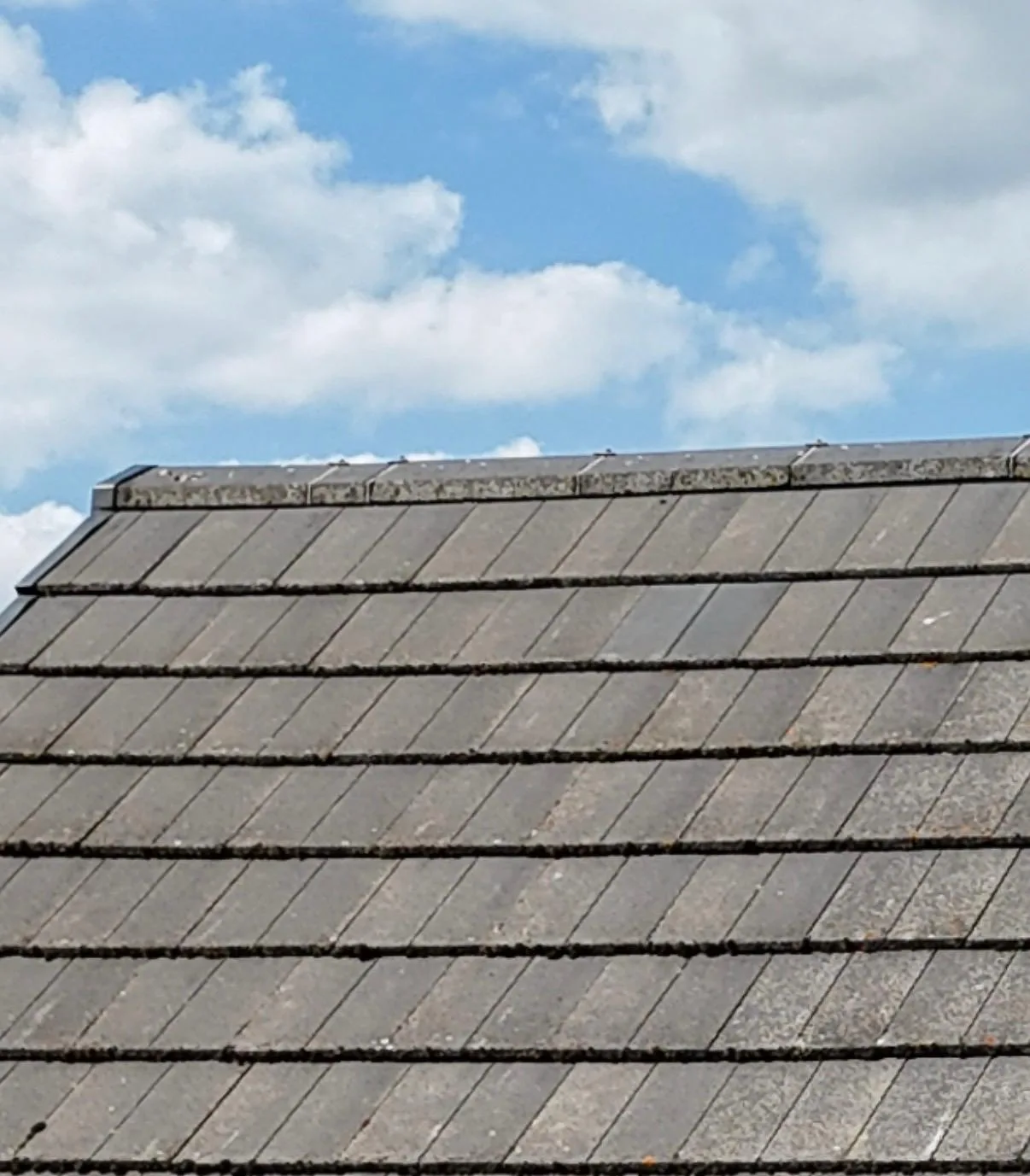
Recommendation: None.
Main roof area
Interlocking concrete tiles throughout, with no slipped or missing tiles observed. Lichen and moss were forming around the chimney abutment, but noticeably less than on the roofs nearby — this one's clearly been maintained.
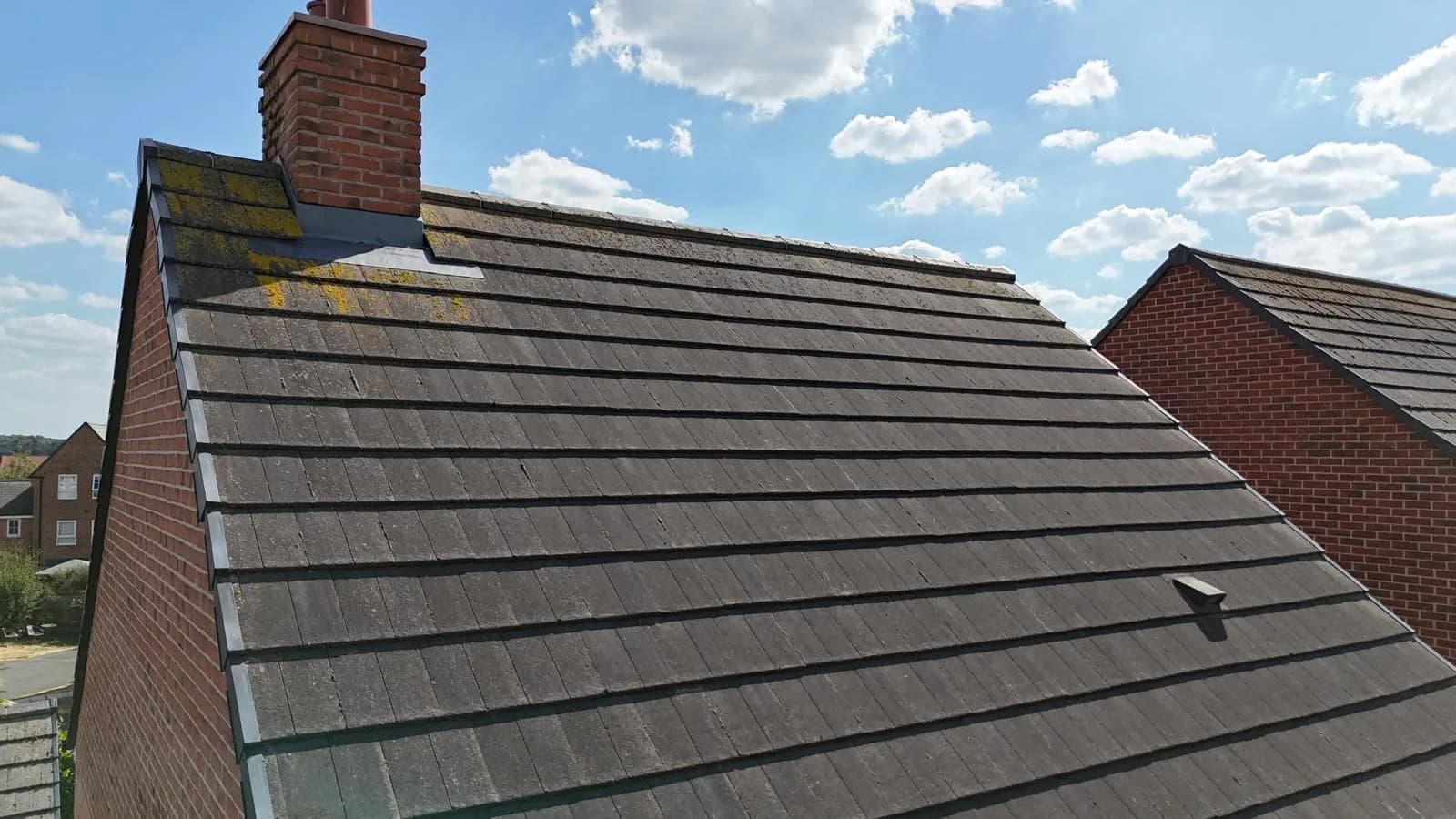
Recommendation: None.
Rainwater goods, fascia boards and soffits
All in good working order. Vents were clear to the soffit areas, the guttering had been cleaned and maintained, and the rainwater goods had already been upgraded to a deep-flow product that copes better with heavy rain.
Recommendation: None.
Yours sincerely,
Mr David Towl Director of DLT Roofing Limited
That's the format every survey gets back: section by section, photographed, with a plain recommendation against each one — even when the recommendation is "nothing to do," and highlighted clearly on the rare occasion it isn't.
Scheduled maintenance for commercial buildings
For schools, industrial units and other commercial buildings, one-off surveys often turn into something more useful: a regular cycle of attention that stops small problems becoming expensive ones.
We carry out scheduled roof cleans — annual or twice-yearly — clearing gutters, outlets and moss build-up, and checking coverings and flashings while we're up there. Pair that with a yearly condition report and you have a documented history of the roof, which helps at budget time and helps if you ever need to make a claim.
This works particularly well for school estates, where roof access is disruptive during term time and planned summer visits are far easier to manage than an unplanned one.
Getting one booked
Get in touch and tell us roughly what the building is and what you need the report for — insurance, a sale, or planning ahead. We'll confirm the price before we do anything.