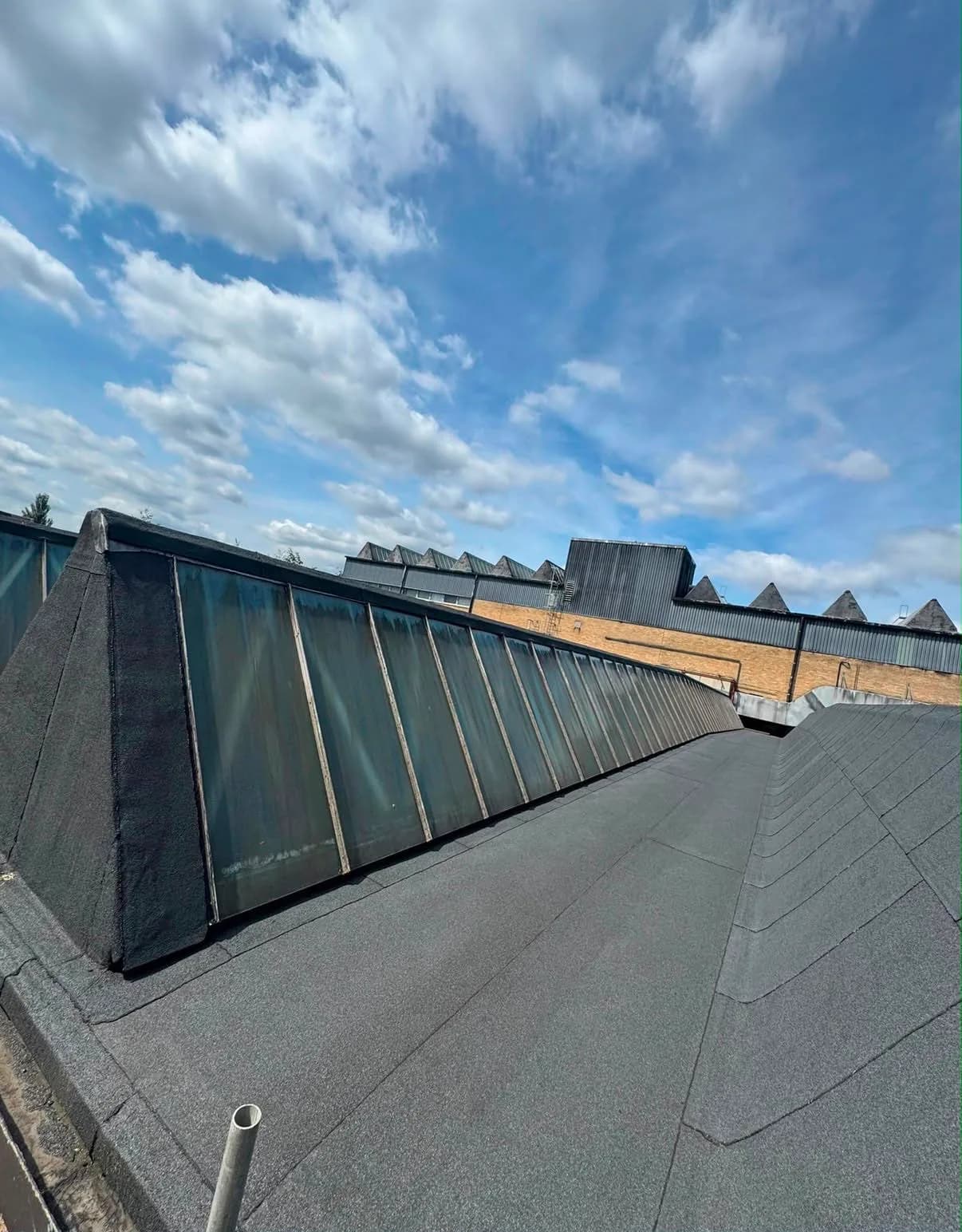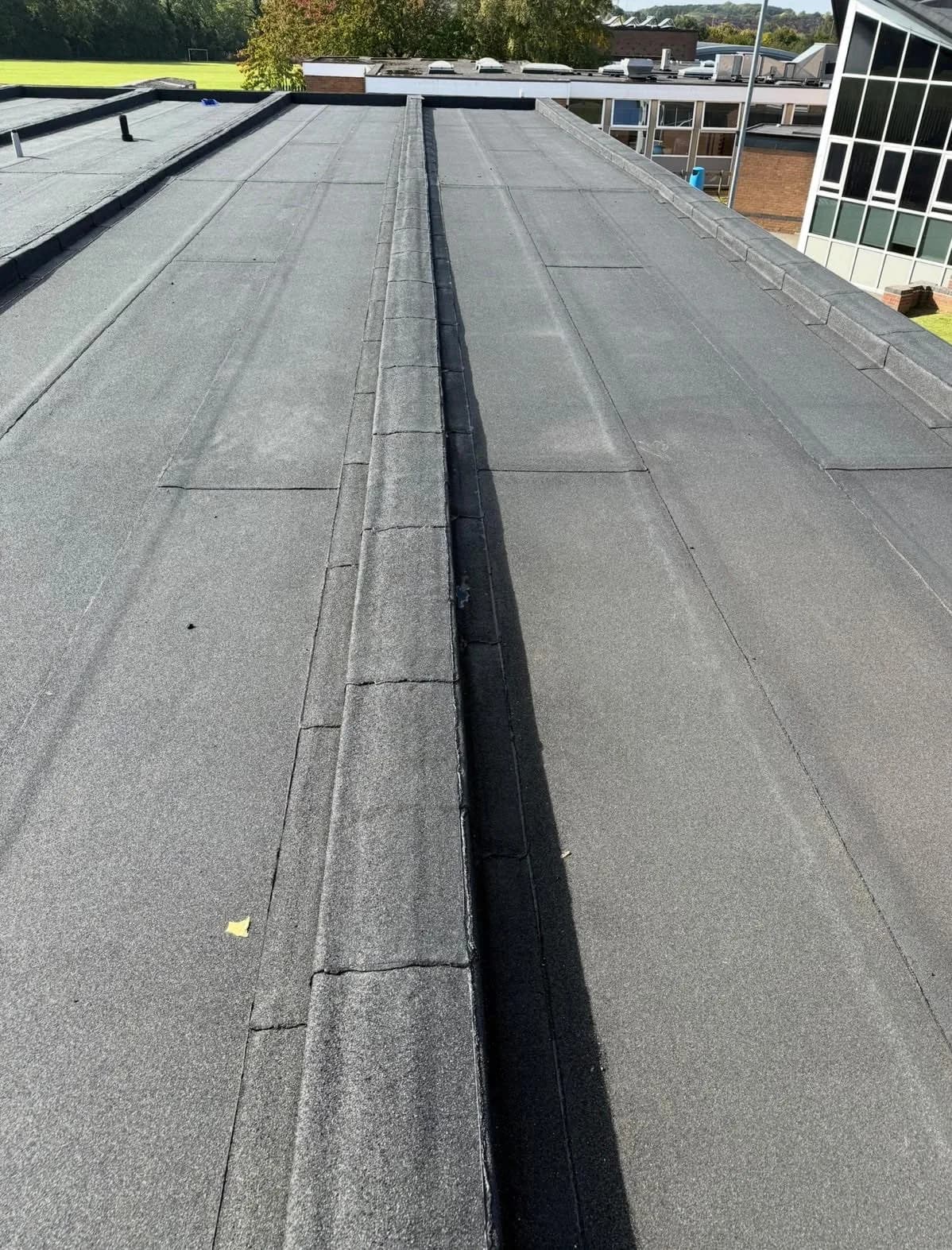
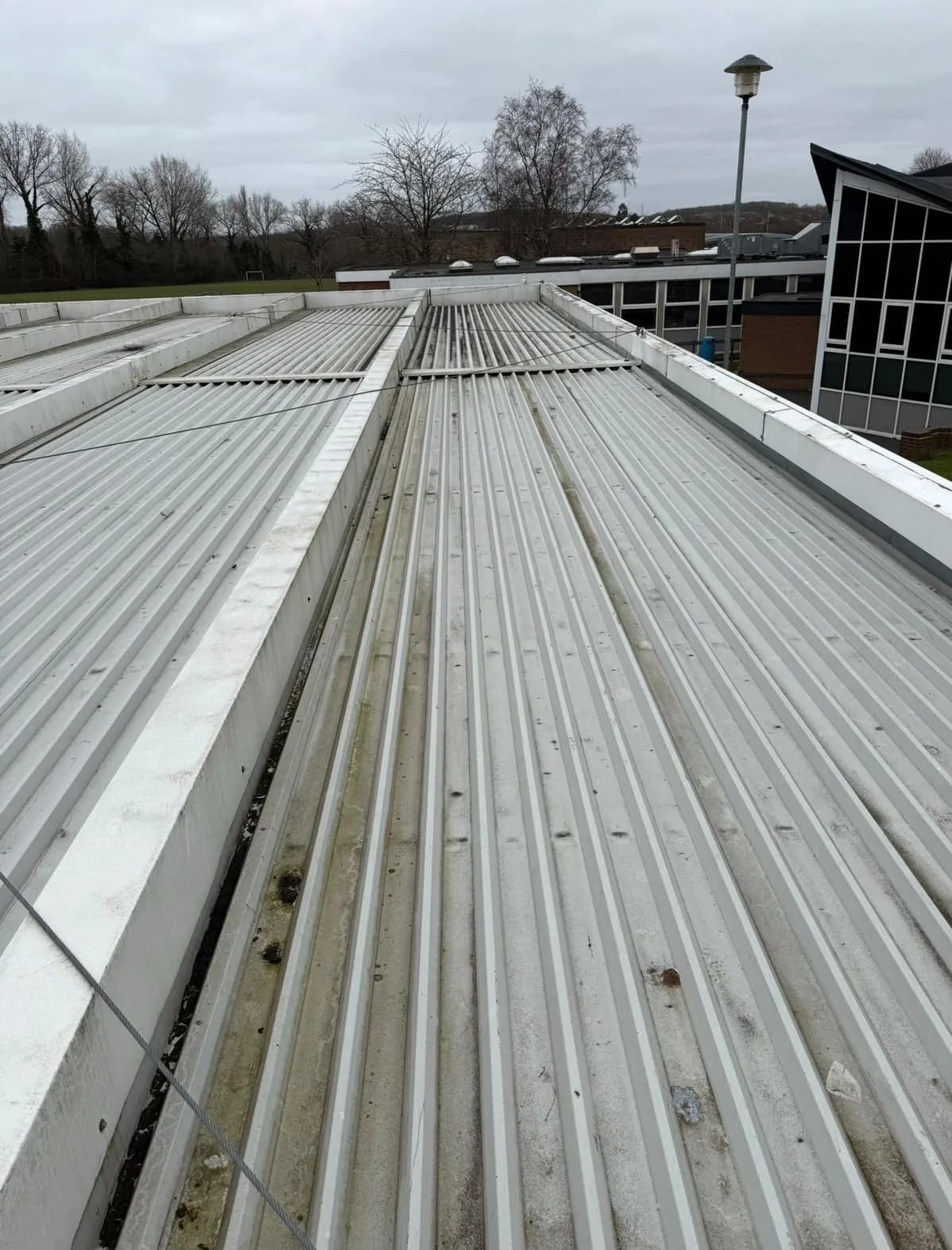
Flat roofs get a bad name, and it's almost always down to how they were fitted rather than the roof itself. Done properly — the right system for the building, laid with care and detailed correctly at the upstands and outlets — a flat roof is quiet, watertight and low-maintenance for decades.
We fit flat roofs on homes, extensions, garages, commercial units and industrial buildings across Leicester and the Midlands. Every system we use is installed by an approved contractor, and our workmanship is guaranteed in writing — the term is set out in your quote before you commit to anything.
The systems we install
There's no single "best" flat roof — the right choice depends on the building, the budget and how the roof will be used. These are the systems we work with day to day.
- EPDM and Resitrix — durable rubber membranes that cope well with the weather and movement.
- Built-up bitumen (felt) — the traditional layered system, typically laid in three layers. Proven, cost-effective, and still the right answer for plenty of roofs. This is what we most often recommend, and where we're able to offer our longest guarantee terms.
- Single-ply membranes — lightweight sheets welded at the seams, well suited to larger commercial and industrial roofs.
- Liquid coatings — brushed or rolled on to form a seamless, fully-bonded finish, useful for awkward shapes, detailing and roofs with a lot of penetrations. They go on cold, which makes them the answer where hot works are restricted — occupied buildings, schools, and anywhere a naked flame isn't going to get signed off.
Strip off, or overlay?
This is the first real decision on a flat roof, and the deck underneath drives it — not whatever would be quickest. If the timber deck is water-damaged or failing, the roof comes off entirely. If the deck is sound, an overlay becomes possible, and it's usually the better spend — but it isn't automatic. Sometimes the covering has failed badly enough that replacing it is the sounder call anyway, and sometimes that's your decision rather than ours. Either way we'll tell you which we'd do and why. We don't charge for extras a roof doesn't need.
Most of the time we can tell you which it is on the first visit. Where the roof can be reached from above, or the underside is visible from inside, we assess the deck there and then, give you the answer on the spot, and confirm it in the written quote.
Sometimes it genuinely can't be seen — the roof is too high to get onto safely, or there's a plasterboarded ceiling in the way. Then the quote carries a contingency for deck replacement, priced and written down. If we open it up and the deck has gone, you already know the number. Nobody gets a surprise halfway through.
Warm deck or cold deck?
Not every flat roof needs insulation at all — a roof over space that isn't heated or lived in, a garage being the usual example, often doesn't. Where it is needed, we'll talk you through the two approaches and which suits your build:
- A warm deck places the insulation above the deck, keeping the structure warm and reducing the risk of condensation — the better choice where you're heating the space below, such as a habitable extension.
- A cold deck insulates between the joists. It's shallower, which can matter where height is tight, such as a garage conversion. Ventilation is the key to getting one right: the void above the insulation has to be able to breathe, or moisture gets trapped against the underside of the deck and condenses there. We detail that ventilation properly rather than treating it as an afterthought — it's the single most common reason a cold deck fails.
We've fitted both — including a job where the garage section used a three-layer cold deck while the adjoining extension got a four-layer warm deck for the extra insulation. We'll spec what the building actually needs, not a one-size-fits-all.
Where a flat roof actually leaks
Almost never in the open middle. Water gets in at the joins, where one strip of felt laps over the next, and at penetrations — skylights, vents, outlets, anything cut through the covering. That's where a flat roof is won or lost, and it's where the time goes.
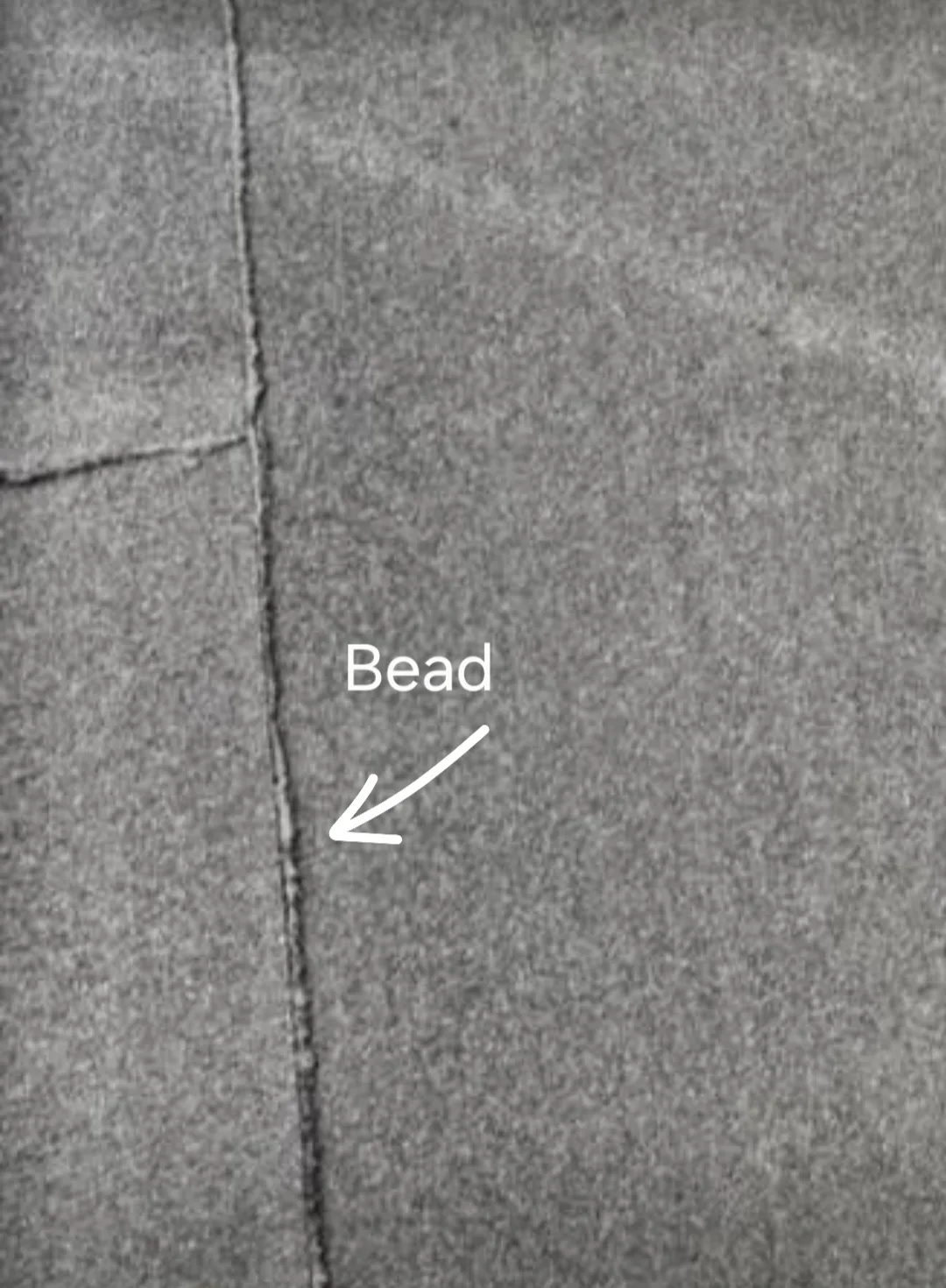
On a bitumen roof there's one thing worth knowing to look for. As each strip is bonded down, bitumen from underneath melts and squeezes out along the edge to form a bead. A continuous bead along a seam means you're looking at a sealed unit. No bead, no seal — however tidy it looks from the ground.
"Flat" is a misnomer, too. Every roof we lay has a fall built into it: a gradient you won't notice by eye, taking water gently to the outlet. Depending on the roof that might be a few millimetres or as much as 150 mm. Water can still sit on a correct fall after heavy rain, and that on its own isn't a fault — the material is built to stand under it.
The guarantee, and who stands behind it
On a re-roof we guarantee our workmanship for ten to twenty-five years, depending on the materials and system used. The exact term is decided by what goes on your roof, so we tell you the figure when we survey it — and then write it into your quote, so you have it before you commit.
That guarantee comes from us directly. We're not passing you to a third-party scheme, and there's nobody else to chase if something needs putting right. We also use high-specification materials that have been tried and tested, so a roof shouldn't fail on product quality either.
And if you ever do need to call on it: send us a message with a photo, and we aim to be out to look within two working days. If it's down to our work we sort it on that visit where we can, and aim to have it resolved within five working days at no extra cost where we can't. If the cause turns out to be something separate, we'll tell you straight and get a written quotation over within seven working days. The full process is here.
What working with us looks like
- We come and look at the roof. One of our team — usually Dave — visits on a date agreed with you.
- You get findings and options, on site. Sometimes there's more than one sensible system for a building; we'll explain the trade-offs and tell you the guarantee term each one carries.
- A written quote follows within seven days, with payment terms, full T&Cs and your workmanship guarantee written in. We text you when it's sent, so it doesn't sit unread in a spam folder.
- If you go ahead, reply by email and we'll agree a start date that suits you. Scaffolding, skip and the rest of it are handled — you don't need to arrange anything.
If you've got a flat roof that's ponding, blistering or letting water in — or you're planning an extension and want it done right first time — get in touch for a free quote. Prefer to send a photo first? That works too.